Manufacturing Network & Production Resources
Manufacturing Locations, Specialized Processes and Defined Production Responsibilities
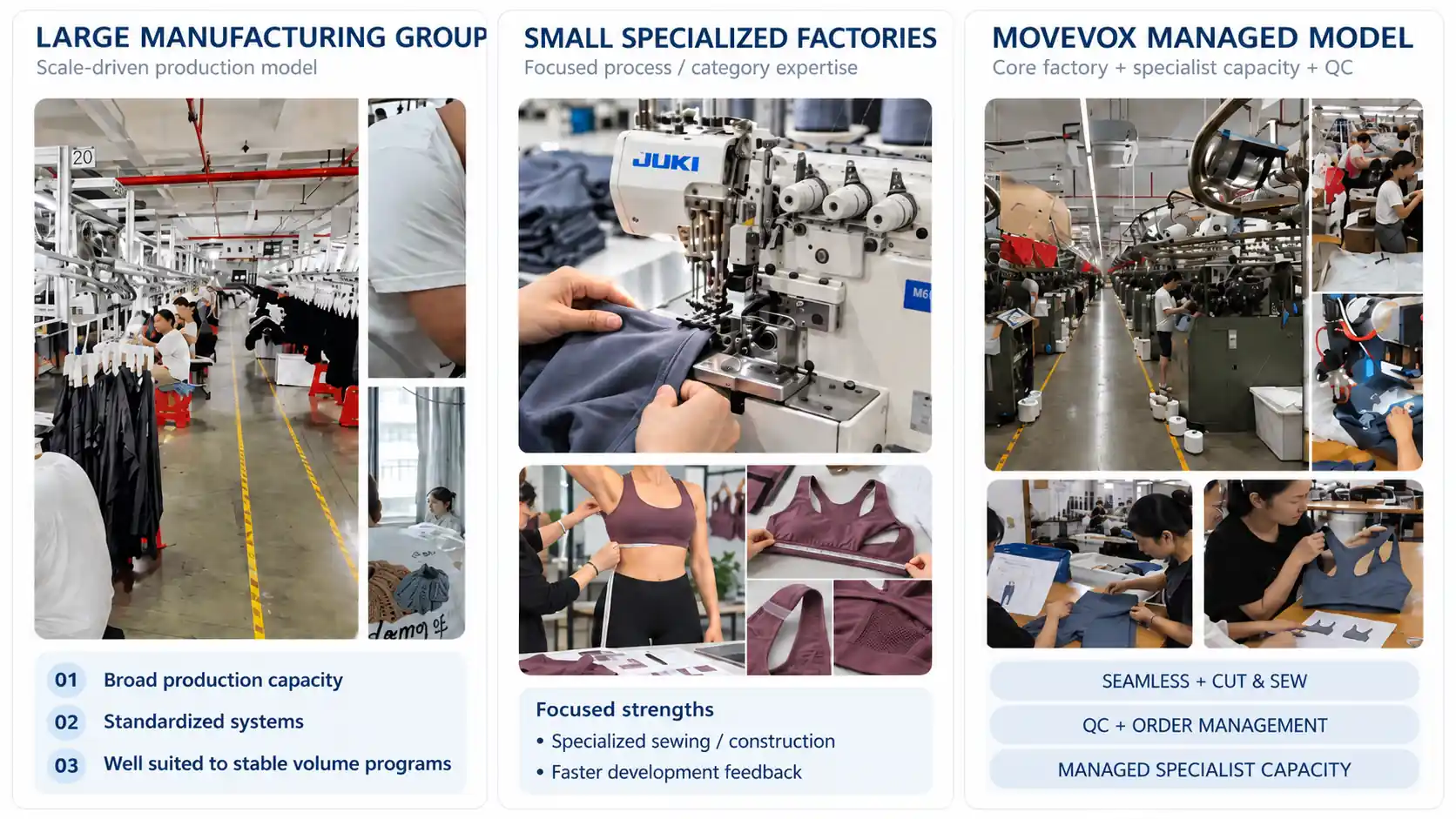
NorvelaFit's manufacturing approach brings together core production resources and specialist manufacturing relationships to support activewear development and production requirements.
For established brands, understanding a manufacturing network means knowing more than where factories are located. Buyers also need to understand which processes take place at each site, how manufacturing resources are organized, and who is responsible for technical requirements, quality, and production execution.
This page introduces the manufacturing locations and resource relationships associated with NorvelaFit's operating model, together with the considerations relevant to site qualification and project-specific manufacturing arrangements.
Manufacturing Locations & Regional Network
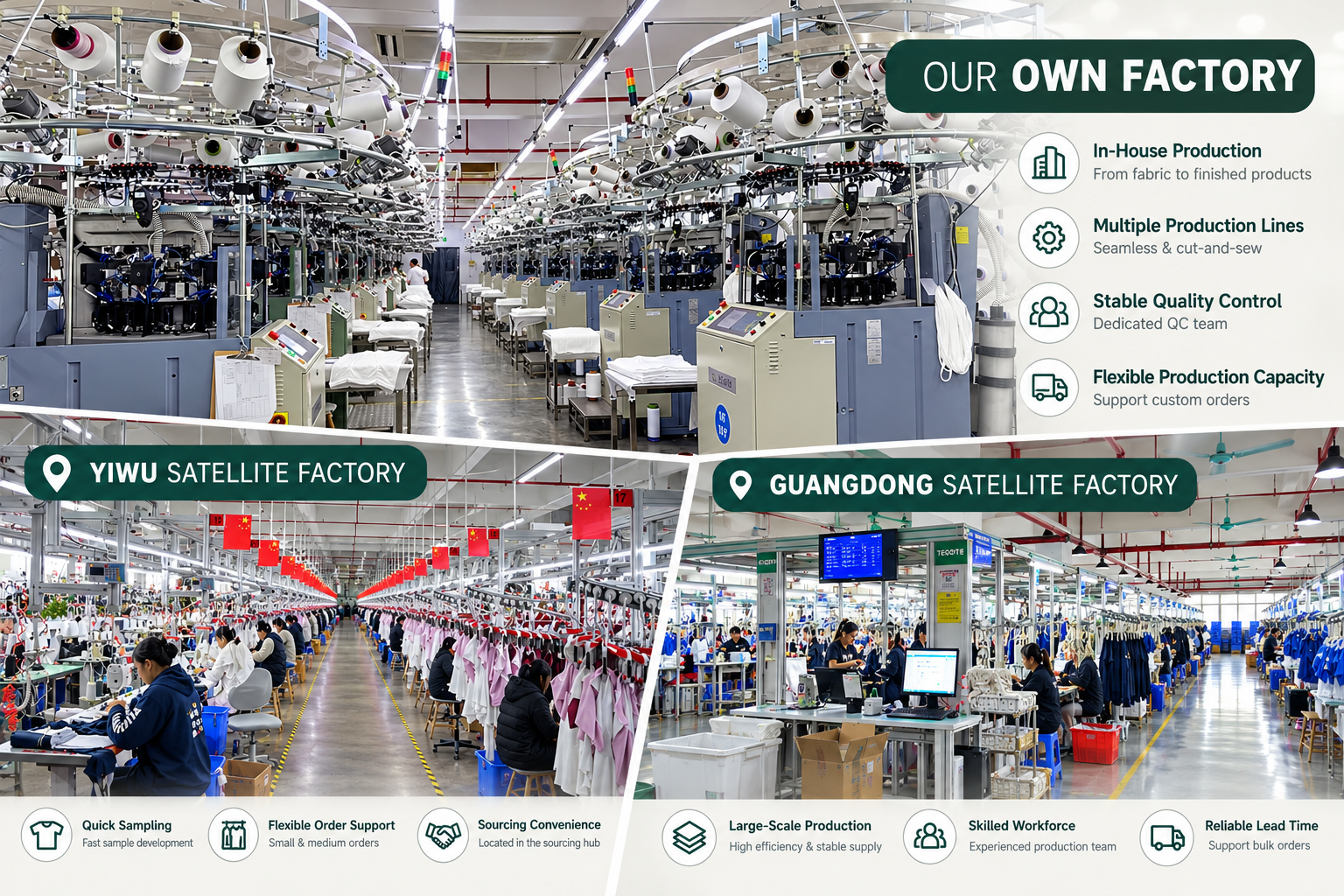
NorvelaFit's manufacturing background is centered on Yiwu, Zhejiang, with a core production base identified in the Futang area and specialist manufacturing relationships described across Yiwu and Guangzhou.
These locations represent different parts of the manufacturing organization. They should not be interpreted as a single factory, a uniform group of production lines, or facilities with identical ownership and technical capabilities.
For a brand's supplier review, the relevant unit is the actual manufacturing site—not simply the city in which a supplier operates.
Yiwu Futang Manufacturing Base
The Futang area of Yiwu is identified in NorvelaFit's operating background as its core manufacturing location.
Its role is relevant to the organization of production resources, technical coordination, and the relationship between development requirements and manufacturing execution.
For a specific project, the actual facility, legal operator, production activities, and applicable approval status need to be identified at site level. An office address or a general location reference is not a substitute for the address of the factory performing the work.
Yiwu Manufacturing Partners
Manufacturing relationships within Yiwu can provide access to additional specialized processes and production resources.
The suitability of a partner depends on its actual operating site, manufacturing scope, technical conditions, quality arrangements, and the requirements of the proposed product.
A manufacturing partner should be distinguished from a facility directly owned or operated by the contracting supplier.
Guangzhou Specialized Resources
NorvelaFit's historical operating information also identifies manufacturing cooperation in Guangzhou.
These resources form part of the company's manufacturing background, but the participation of any particular facility in a new project depends on its current relationship, relevant process capabilities, and customer requirements.
The presence of resources in multiple regions does not mean that every production site is qualified for every garment type.
For procurement and factory qualification purposes, manufacturing locations should be considered together with their actual functions, responsible operators, and the production work proposed for the project.
Factory Ownership, Operation & Partnerships
Manufacturing relationships are not all structured in the same way.
A production facility may be owned by one entity, operated by another, or made available through a lease, authorized-use arrangement, or manufacturing agreement. Equipment ownership and responsibility for an individual production order may also be separate.
NorvelaFit's manufacturing framework distinguishes directly operated resources, partner manufacturing sites, and specialized processing partners. These categories help clarify the relationship between production execution and the entity responsible for managing the customer project.
Directly Operated Resources
A directly operated production resource is defined by the actual responsibility exercised over manufacturing activities, personnel or process management, and production decisions.
Operating a facility does not necessarily mean owning the building or every machine installed within it.
Where ownership, leasehold, or authorized-use status is relevant to a customer's qualification process, the appropriate supporting documents must be considered separately from operational descriptions.
Partner Manufacturing Sites
A partner factory is an independent manufacturing resource involved through an applicable commercial and production relationship.
Its role may include garment manufacturing, particular construction methods, or additional capacity for suitable product categories.
The scope of work, production location, quality responsibilities, and customer approval requirements need to be understood for the actual project.
A partner's equipment, employees, or premises should not be represented as directly owned resources without the corresponding legal basis.
Specialized Processing Partners
Certain garment operations may require specialist processing outside the principal manufacturing site.
Examples can include printing, logo application, selected finishing processes, and packaging-related work.
The relevant supplier, approved artwork, process requirements, inspection responsibilities, and transfer of goods must be considered where such operations form part of the manufacturing arrangement.
For the commercial and organizational responsibilities behind these relationships, see Our Business Model.
Manufacturing Functions Across Sites
Different activewear products can require different manufacturing processes, equipment configurations, and technical skills.
NorvelaFit's manufacturing network framework brings together seamless knitting, cut-and-sew production, and relevant specialist operations. The appropriate production arrangement depends on the garment's construction, material requirements, development status, and the capabilities of the actual manufacturing site.
Not every facility is expected to perform every operation.
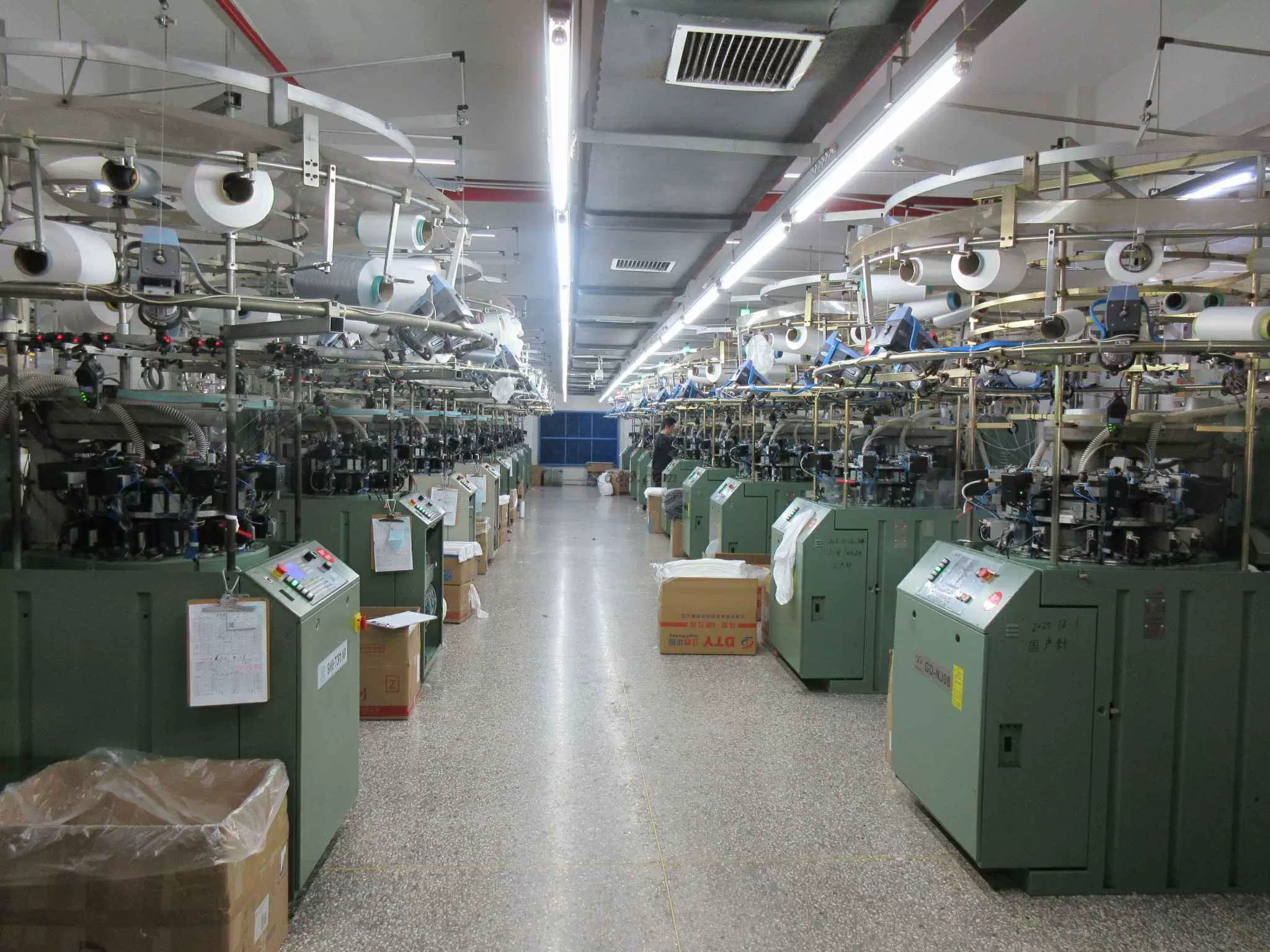
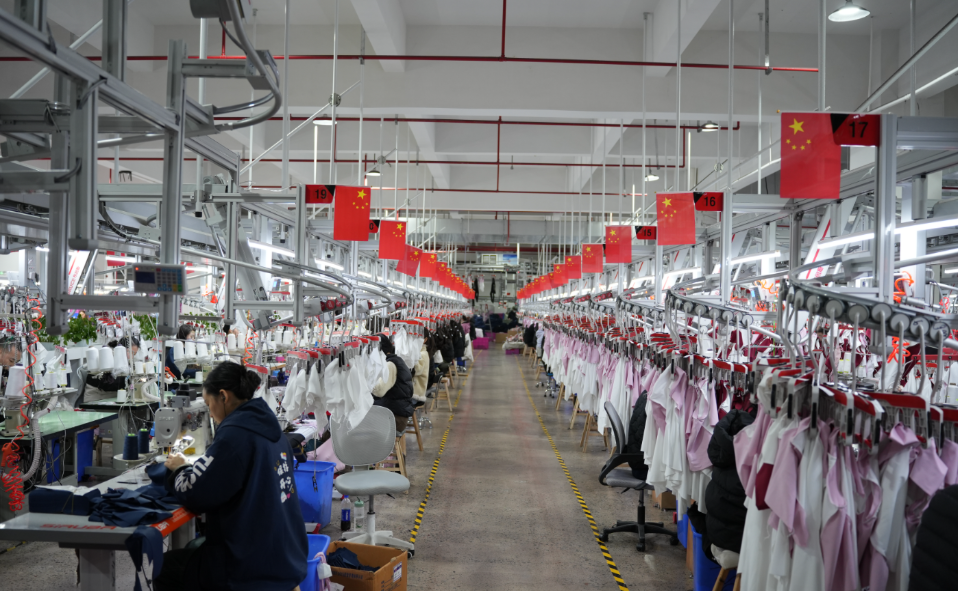
Seamless Knitting
Seamless manufacturing uses specialized knitting equipment to form garments or garment components with engineered structures and stretch characteristics.
The manufacturing requirements depend on yarn selection, machine configuration, knitting programs, garment dimensions, and the intended design.
For example, a seamless legging with localized rib or mesh structures presents different technical requirements from a conventional cut-and-sew legging.
The manufacturing location must be considered alongside the relevant equipment and its suitability for the specific style.
Explore Seamless Manufacturing for further information on knitting technology, garment engineering, and technical feasibility.

Cut-and-Sew Manufacturing
Cut-and-sew manufacturing involves material preparation, pattern-based cutting, stitching, assembly, and finishing.
The relevant equipment and processes depend on the garment's fabric, seam construction, fit requirements, and intended performance.
Stretch leggings, sports bras, fitted tops, and other activewear styles may require different combinations of sewing operations and construction techniques.
A factory's ability to sew garments generally does not establish its suitability for every technical activewear specification.
Learn more through Cut-and-Sew Manufacturing.

Finishing & Specialized Processes
Additional processes may include selected printing methods, logo applications, bonding, labeling, finishing, and packaging.
These operations may take place within a garment factory or through a separate specialist facility.
When more than one site is involved, the manufacturing arrangement needs to account for material and garment movement, technical specifications, approved artwork, quality requirements, and responsibility at each handover.
The objective is to match the required manufacturing operations with suitable production resources—not to assume that one facility or process is appropriate for every product.
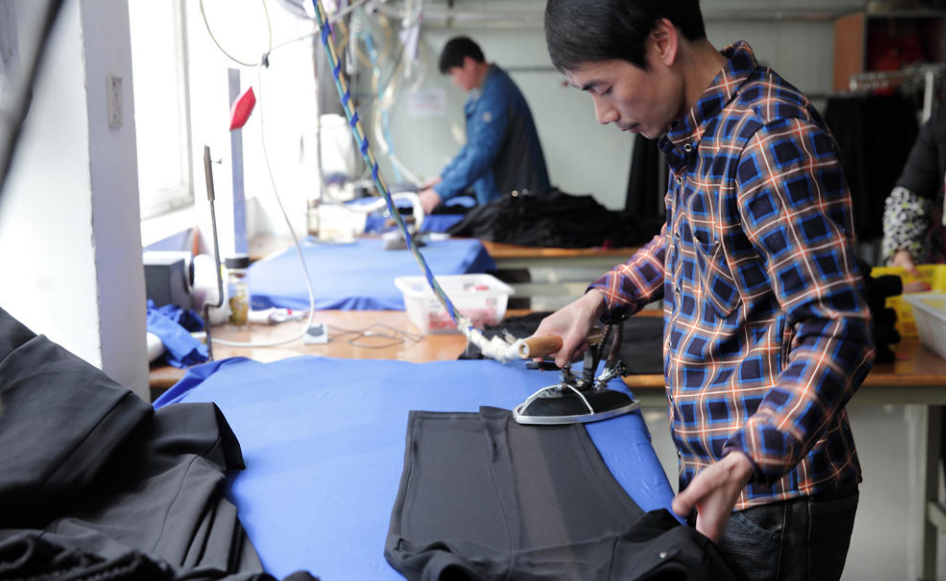
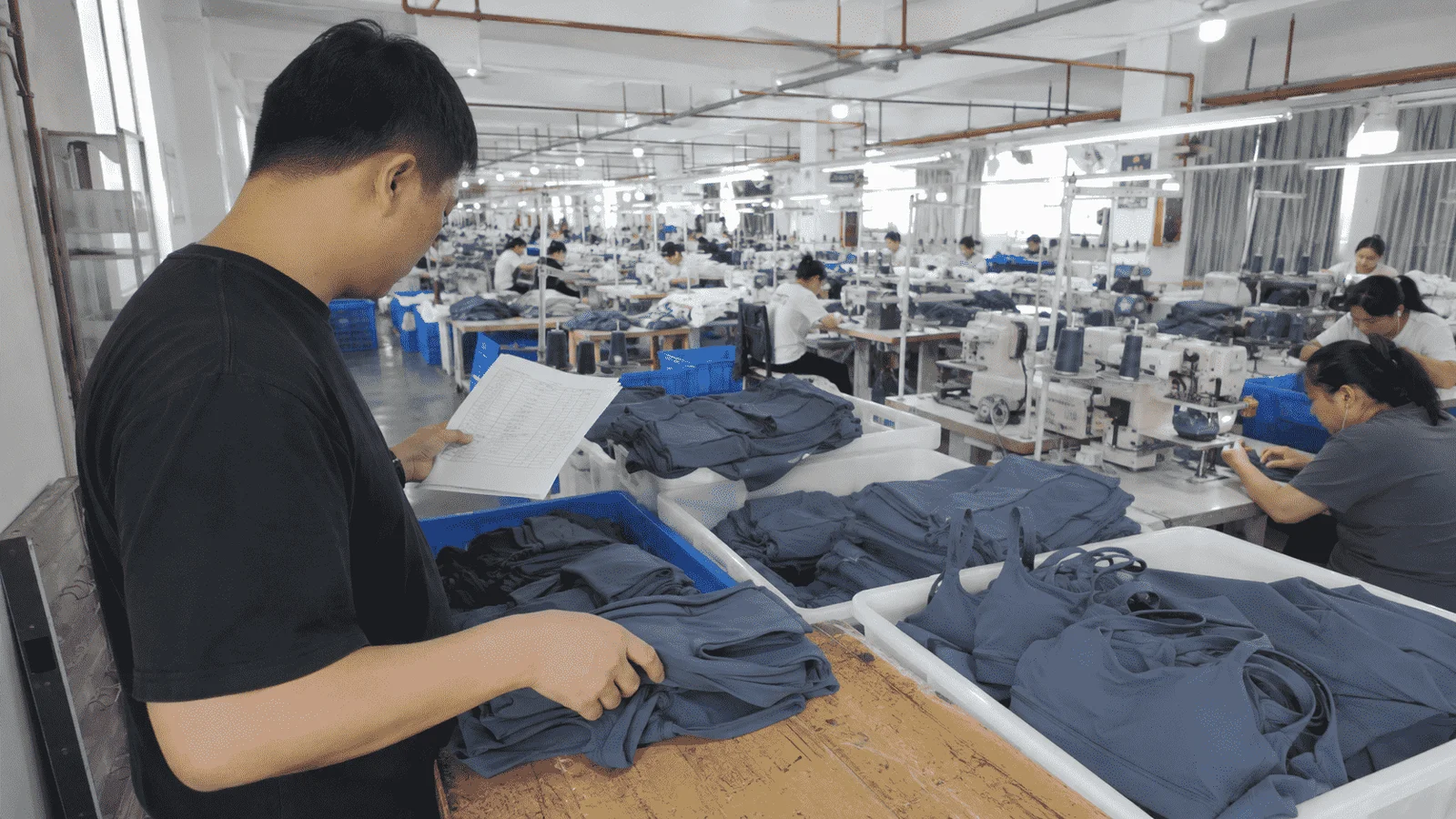
Inside the Manufacturing Sites
A manufacturing site is more than a building or a production address.
The organization of production areas, material handling, work in progress, inspection activities, and finishing operations can affect how a factory supports the requirements of a particular activewear product.
For supplier evaluation, the relevant question is whether the actual site and its working environment correspond to the manufacturing activities proposed for the order.
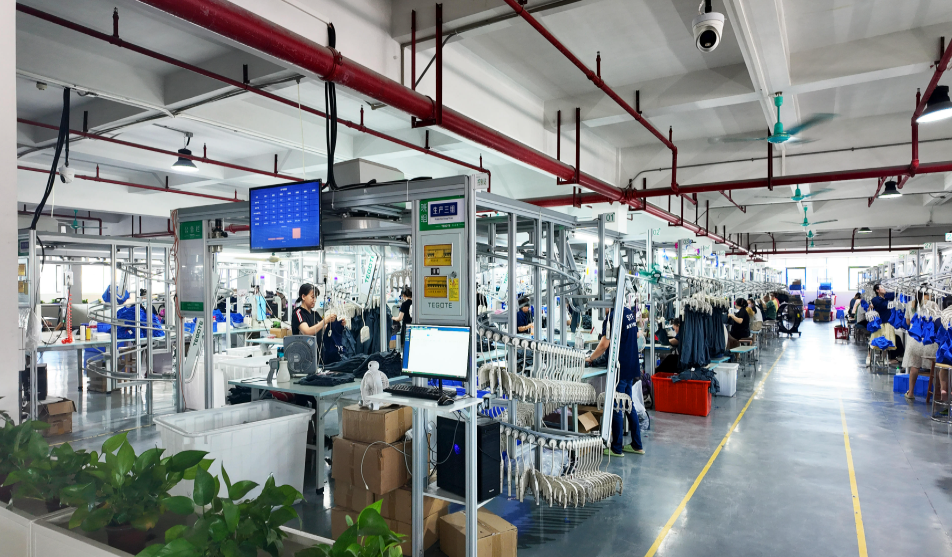
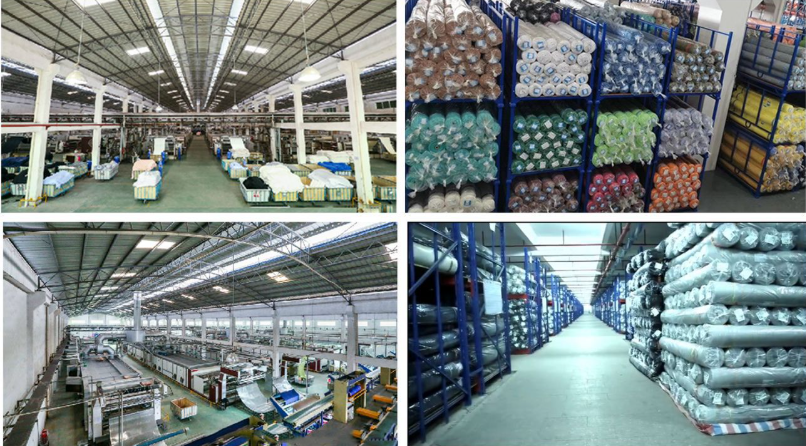
Production Areas
Production areas should be understood in relation to the processes performed at the site.
Seamless knitting, fabric cutting, garment assembly, and other operations require different equipment, workspaces, and technical arrangements.
A facility may specialize in one part of the manufacturing process rather than operate a complete garment production sequence.
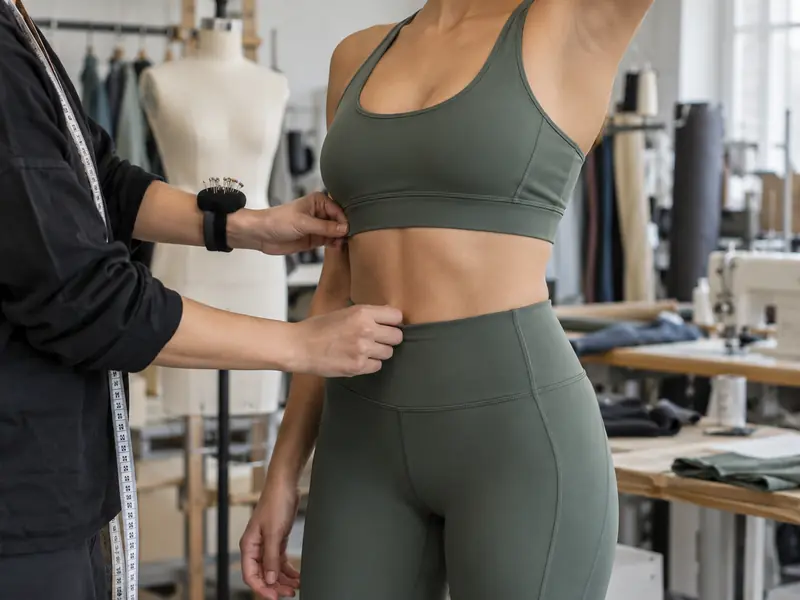
Site photographs and production walkthroughs are most useful when they identify the actual location and the work being performed.
Material & Work-in-Progress Areas
Material storage and work-in-progress handling are also relevant to manufacturing readiness.
Fabric rolls, yarn lots, cut panels, semi-finished garments, and approved components need identification appropriate to the material, process, and production stage.
Where goods move between sites, the condition, quantity, identification, and receiving responsibility of the transferred materials or garments become important.
Inspection & Finishing Areas
Inspection and finishing arrangements should reflect the operations carried out at the facility.
Depending on the site, these may involve checking knitting quality, garment measurements, seam workmanship, appearance, labeling, or packaging.
The location of an inspection activity matters when determining which production processes and goods it actually covers.
For buyers reviewing NorvelaFit's manufacturing resources, facility information is most meaningful when real site images can be connected to the relevant operations, responsible factory, and production scope.
Equipment, Technical Fit & Production Readiness
The presence of manufacturing equipment does not, by itself, establish that a facility is ready to produce a particular activewear style.
Equipment suitability depends on the required process, machine configuration, technical condition, available operating resources, and the specifications of the proposed garment.
NorvelaFit's manufacturing resource framework distinguishes equipment identification, technical compatibility, and production availability when considering a manufacturing arrangement.

Equipment Identity & Location
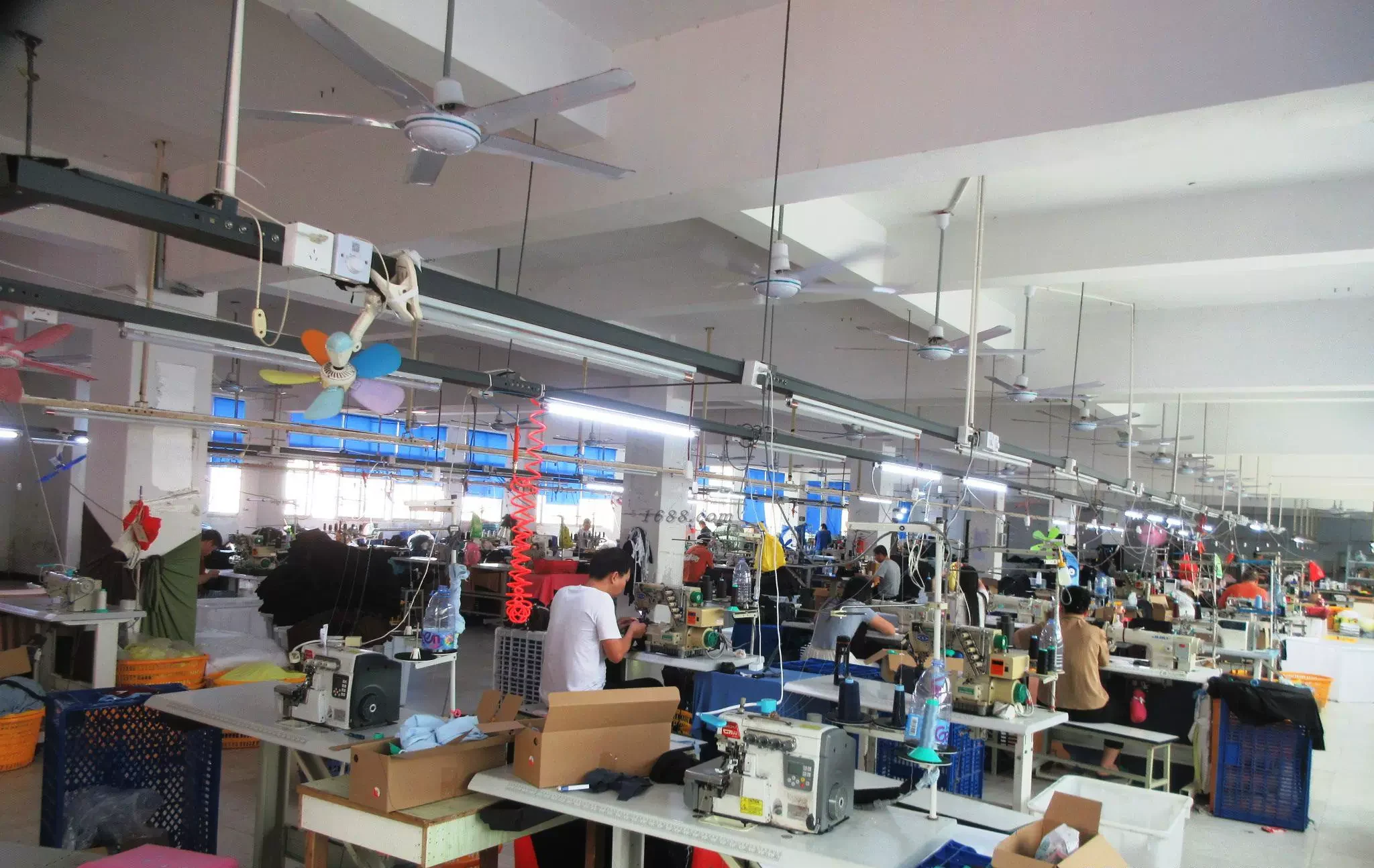
Equipment information should relate to the factory where the machinery is installed and used.
For seamless manufacturing, relevant details may include the machine manufacturer, model, configuration, knitting capabilities, and the type of garment structures it can produce.
For cut-and-sew manufacturing, the required resources may involve cutting equipment, overlock or coverstitch operations, flatseaming, and other appropriate sewing or finishing processes.
Machine ownership, site location, and operating responsibility are separate considerations.
An equipment photograph becomes more useful when it can be associated with an identifiable machine, its production location, and the process being assessed.
Technical Compatibility
A machine type must be evaluated against the garment's actual construction.
For example, seamless knitting requirements may involve yarn compatibility, garment dimensions, stitch structures, and the machine's configuration.
Cut-and-sew production may involve fabric handling, stitch elasticity, seam allowance, and construction details that require suitable equipment and technical setup.
An equipment list is therefore a starting point for capability assessment rather than proof that every proposed style can be manufactured without further technical review.
Capacity Evidence & Availability
Available production capacity is influenced by more than the number of machines installed.
The garment specification, machine operating status, production scheduling, material availability, technical staffing, process time, and expected quality requirements all affect realistic output.
Capacity information should correspond to a defined site, product or process, and planning period.
For professional buyers, this distinction helps separate nominal manufacturing resources from the capacity that may actually be appropriate and available for a specific order.
Order Allocation & Multi-Site Coordination
A manufacturing network becomes relevant to a buyer when specific production requirements can be connected to the facilities responsible for carrying them out.
NorvelaFit's production coordination framework links the manufacturing arrangement to the applicable order, style, technical specifications, approved materials, and quality requirements.
Where multiple production resources are involved, the objective is to maintain clarity about which facility performs each operation and which approvals govern the work.
Factory Assignment
Manufacturing site selection depends on the actual product requirements.
A seamless garment, a cut-and-sew sports bra, and a collection involving specialized finishing processes may require different combinations of equipment, technical expertise, and approved resources.
Factory assignment should therefore consider the intended construction, material requirements, relevant quality criteria, available resources, and any customer restrictions on manufacturing locations.
A facility identified as a potential supplier is not necessarily an approved production site for a particular order.
Approved Technical Handover
Technical information needs to remain consistent when work moves from development into manufacturing or between separate production operations.
Relevant references can include the approved tech pack revision, bill of materials, measurement specifications, approved sample, artwork, material identification, and applicable inspection criteria.
The receiving manufacturing site must have the information appropriate to the operation it is expected to perform.
An outdated specification or unapproved material substitution can create inconsistency even where the manufacturing process itself is technically suitable.
Cross-Site Production Interfaces
When operations are divided between facilities, the handover of materials or partly completed garments requires defined responsibilities.
These may include identification of the goods transferred, quantities, applicable technical requirements, inspection status, receiving checks, and the handling of any detected discrepancies.
The order's manufacturing arrangement also needs to remain consistent with customer approval requirements.
For the broader planning, material coordination, production scheduling, and delivery responsibilities associated with these activities, explore Production & Supply Chain Management.
Site-Level Quality & Factory Change Control
Manufacturing responsibility must be clear at the site where production takes place.
For activewear brands, supplier qualification and quality requirements may apply not only to the contracting company but also to the factory, production process, and any additional manufacturing resources involved in the order.
NorvelaFit's factory management framework distinguishes site-level quality responsibilities from customer approval and manufacturing-change requirements.
Factory-Specific Quality Responsibilities
Each manufacturing operation has quality considerations appropriate to the work performed.
In seamless knitting, relevant checks may concern yarn identification, knitting consistency, garment dimensions, and defects associated with the knitted structure.
In cut-and-sew production, inspection may address material conformity, cut-panel accuracy, stitch and seam workmanship, garment measurements, and finishing requirements.
Where specialized processing is performed by another facility, the applicable quality criteria and inspection responsibilities need to remain clear.
The inspection plan should be based on the approved product specifications and customer requirements, rather than assuming identical control activities at every site.
Approved Production Sites
Some brands require manufacturing to take place only at factories approved through their supplier qualification procedures.
In those circumstances, the actual production site and the processes performed there must remain consistent with the customer's authorization.
A factory's participation in a supplier network does not automatically establish approval by an individual brand.
The relevant manufacturing and quality responsibilities should be considered before production is assigned.
Manufacturing Site Changes
Changing the factory or subcontractor responsible for an operation can affect technical conditions, product consistency, quality responsibility, and compliance requirements.
Where the contract or customer standards require approval, a proposed change must be reviewed before affected production is transferred.
The review may need to consider the new facility, the process involved, technical specifications, material controls, qualification status, and any additional verification required.
For further information on quality standards, inspection responsibilities, and corrective-action principles, see Quality Management.
Manufacturing Network Evidence & Buyer Review
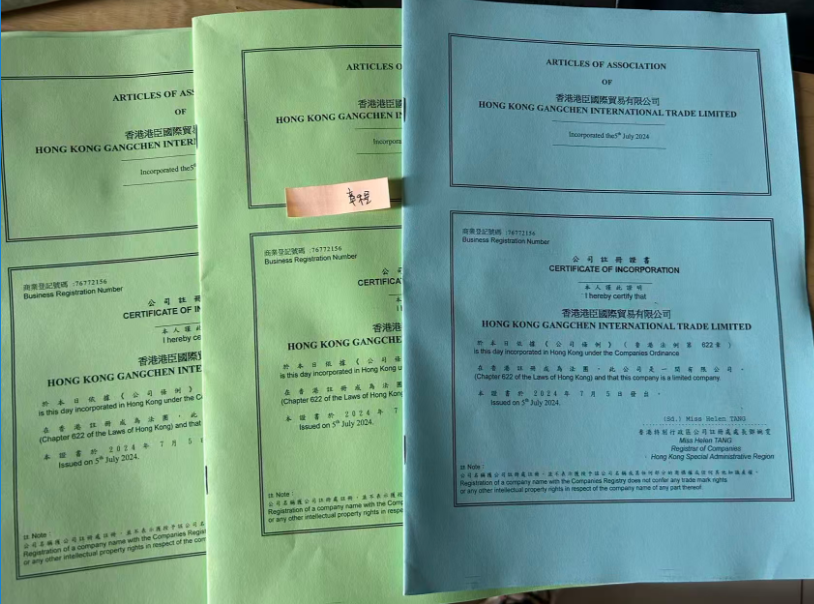
Manufacturing network information is most useful when buyers can relate it to identifiable sites, production activities, and supporting records.
A factory photograph, equipment list, operating agreement, and inspection report may all contribute to supplier evaluation, but they answer different questions.
NorvelaFit's manufacturing information framework distinguishes public site descriptions from the more detailed documents that may be required during formal supplier qualification.
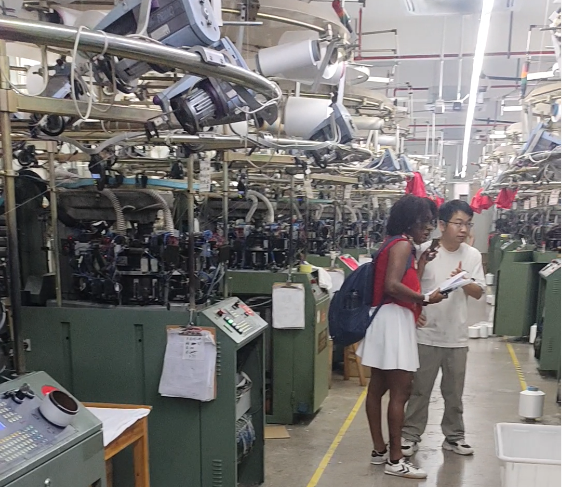
Manufacturing Site Information
Site-level information should identify the actual manufacturing location, relevant operating entity, principal production functions, and relationship to the proposed manufacturing arrangement.
This helps distinguish the company managing the customer relationship from the facility performing the physical production work.
Where a brand requires factory approval, the relevant information must correspond to the actual site and activities under review.

Operational & Equipment Evidence
Production-area photographs, identifiable machinery, process information, and technical samples can help establish the physical manufacturing activities associated with a site.
Their value depends on accurate identification.
A machine located at a partner facility should not be presented as equipment directly owned by the contracting company. Similarly, a photograph of a sample room does not establish the scale or readiness of a separate bulk production operation.
Equipment information is most meaningful when considered alongside its location, configuration, operating status, and the proposed garment requirements.

Controlled Audit Documentation
Formal supplier reviews may require additional information beyond what is appropriate for a public website.
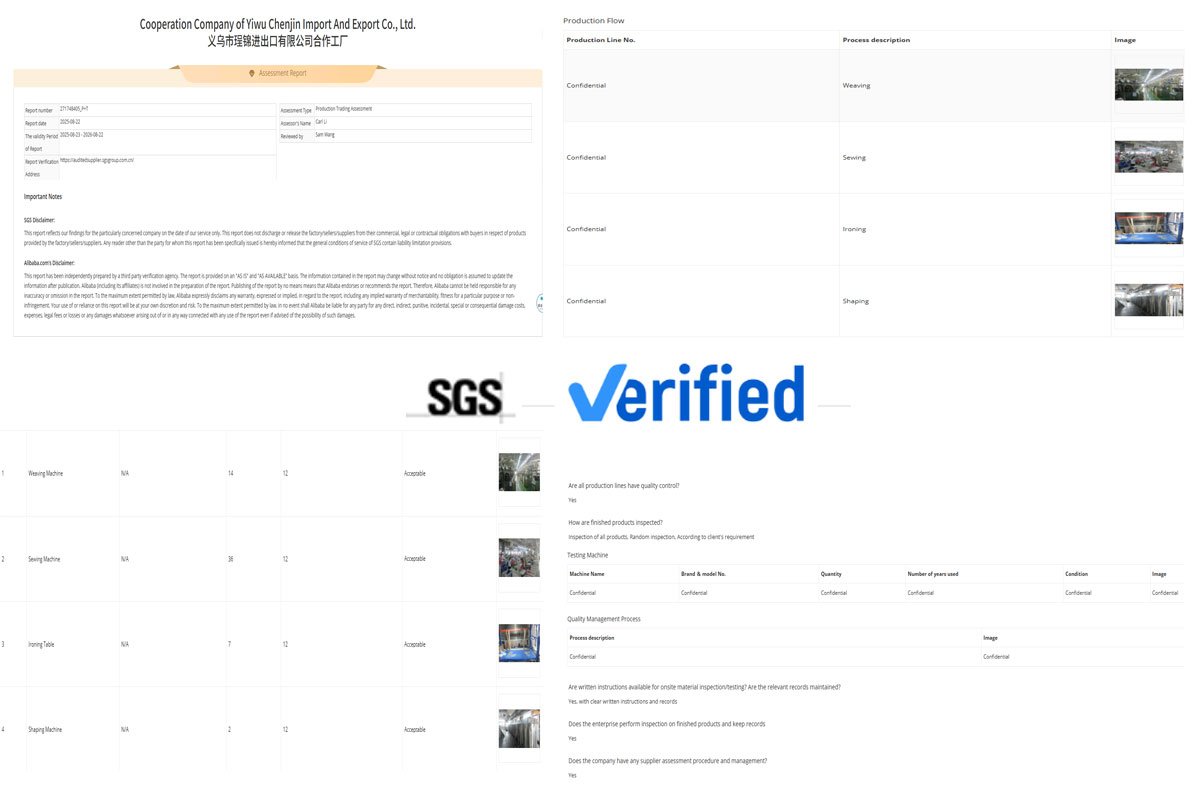
Depending on the review, documentation may cover the legal operator, manufacturing address, relevant contractual relationship, production processes, site qualifications, quality controls, and applicable audit records.
Commercially sensitive documents, customer-specific information, and restricted legal records should be reviewed through the appropriate authorized process.
Certificates and third-party assessments must be considered within their actual scope, site coverage, and period of validity.
For the requirements involved in reviewing manufacturing sites and supplier qualification, explore Factory Audit & Vendor Qualification.
The purpose of a manufacturing network review is to establish what can be verified about the facilities relevant to a project—not to treat every site, certificate, or production claim as interchangeable.
Review Manufacturing Fit for Your Project
The suitability of a manufacturing network depends on the products your brand intends to develop or manufacture.
Garment construction, fabric and yarn requirements, technical specifications, production quantities, quality standards, and factory qualification conditions all influence the resources that may be appropriate for a project.
A useful initial discussion connects these requirements with the proposed manufacturing processes and the questions that still need technical or commercial evaluation.

Information for a Manufacturing Review
Please share the information currently available:
- Product scope: Garment types, style references, and intended activities
- Technical requirements: Tech packs, approved samples, measurement specifications, or construction details
- Manufacturing approach: Seamless, cut-and-sew, or specialist processing requirements
- Materials: Fabric, yarn, trim, and performance specifications
- Project scale: Estimated quantities, size ranges, colorways, and intended production schedule
- Quality requirements: Relevant inspection, testing, and product acceptance criteria
- Supplier qualification: Factory audit requirements, approved-site restrictions, or other applicable conditions
- Target markets: Countries or regions associated with the product's intended distribution
Not every detail needs to be finalized before the first discussion. Identifying approved specifications and open technical questions helps establish what should be reviewed next.
Manufacturing site selection, available production resources, and project conditions must be assessed against the actual requirements before commitments are confirmed.
If your team is preparing an activewear development or manufacturing project, we welcome the opportunity to review its technical and sourcing requirements.